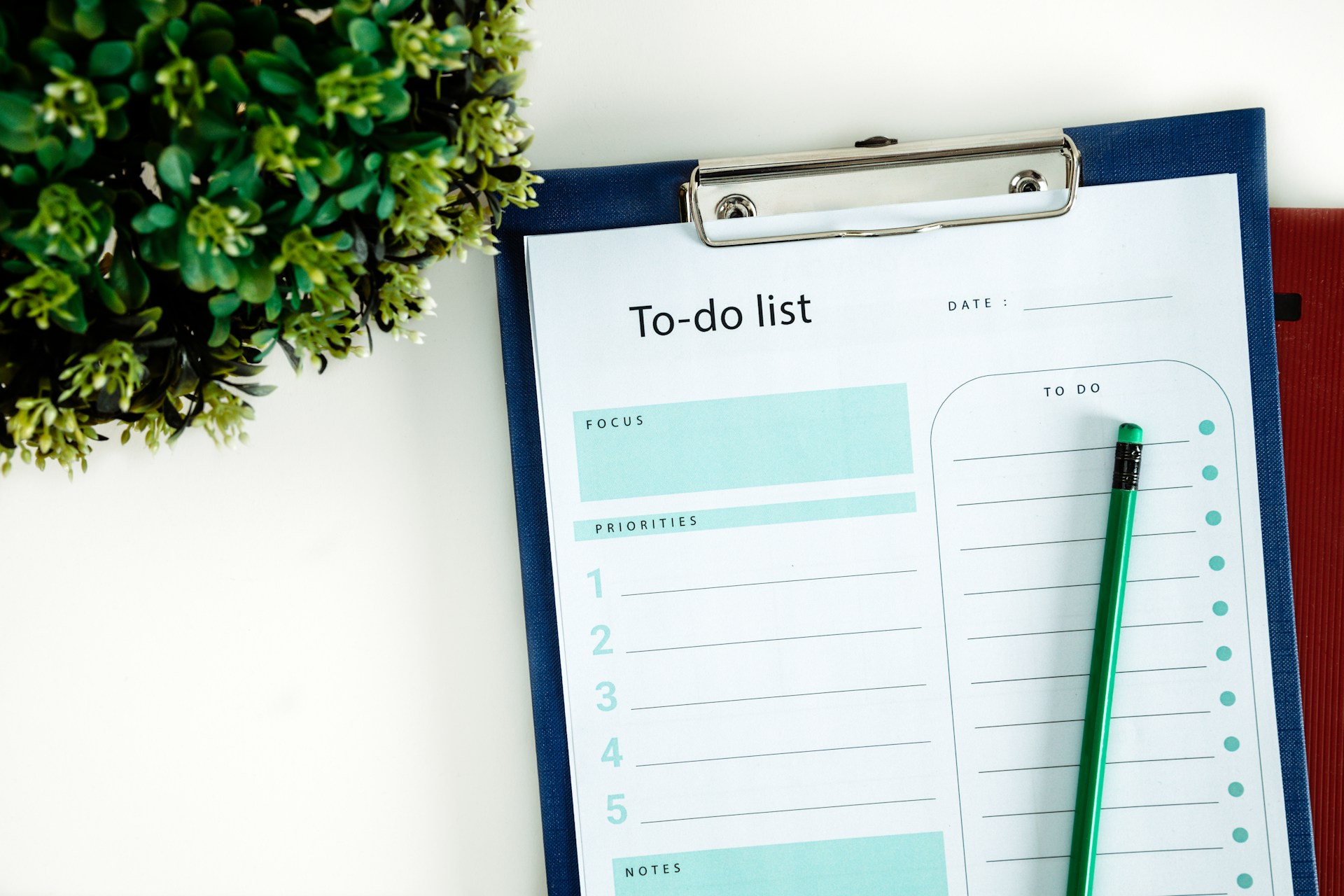
The Complete Daily Checklist for Weight Loss
What you are going to read below isn't just a list of things to eat. It is a checklist for weight loss that manages your environment, your schedule, and your habits. When you turn these actions into a daily routine, you stop making conscious decisions about each action that affects your weight loss, and when you stop making decisions, you stop making mistakes.
Phase 1: The Morning Routine
How you start the morning usually dictates how you finish the day. If you start with chaos and hunger, you are on a route to play catch-up all day.
1. Drink Water Before Caffeine
Most of us wake up dehydrated, and we confuse this thirst for hunger. That’s why it is important to drink 16oz (one big glass) of water immediately after waking up. But for many, the first drink of the day is coffee, which is a diuretic (it makes you pee). If you drink coffee first, you get more dehydrated. Water fixes your fluid balance and wakes up your digestive system.
2. Get Morning Light
Your body has an internal clock called the circadian rhythm. It controls your sleep and your metabolism. Spend 5-10 minutes outside or near a bright window within an hour of waking up. Sunlight tells your body, "It is daytime." This helps regulate cortisol (stress hormone) and helps you sleep better at night. Poor sleep is a huge hidden cause of weight gain.
3. Eat a High-Protein Breakfast
This is the most important food rule. The standard American breakfasts that consist of cereal, toast, and bagels are just sugar and carbs. They spike your insulin and crash it two hours later. You should include at least 30 grams of protein in your breakfast to suppress ghrelin, the hunger hormone. If you eat protein in the morning, you will crave less sugar in the afternoon.
Example of a high-protein breakfast: 3 eggs, a scoop of protein powder, or a cup of Greek yogurt.
Phase 2: The Nutrition Strategy
You do not need to be a chef. You just need a formula. Use this checklist for weight loss in your main meal.
4. Use the "One Plate" Rule
Counting calories works, but it is annoying and time-consuming. The plate method works almost as well and is much easier.
Here is how to prepare your plate:
- 1/2 of the plate: vegetables (spinach, broccoli, peppers).
- 1/4 of the plate: lean protein (chicken, fish, tofu, beef).
- 1/4 of the plate: carbs (rice, potato, pasta).
Vegetables are high in volume but low in calories. You can eat a massive amount of them and feel full without blowing your calorie limit.
5. Eat Slowly and Without Screens
We often eat while scrolling through social media or watching TV. When distracted, our brain misses the "I am full" signal. Put the phone down. Chew your food. Take 20 minutes to finish a meal. It takes about 20 minutes for your stomach to tell your brain it has had enough food. If you hurry up with lunch and eat it in 5 minutes, you will think you are still hungry.
6. Liquid Calories Audit
This is the easiest way to cut 500 calories a day without feeling hungry. When thirsty, stick to water, black coffee, or unsweetened tea. Avoid soda, juice, and sugary coffee drinks. This is important because the body does not register liquid calories the same way as solid food. You can drink 300 calories of orange juice and feel zero fullness.
Phase 3: Movement and Activity
Exercise is great, but "daily movement" is better for fat loss.
7. Track Your Steps
You should aim for 7,000 to 10,000 steps a day. One trick for making more steps is parking further away at the store. Take the stairs instead of the elevator. Walk while talking on the phone. Sitting all day tells your body to store energy; walking tells your body to use it.
8. Lift Something Heavy (2-3 Times a Week)
Cardio helps you lose weight, but strength training helps you keep it off. Aim for three sessions of resistance training a week. Muscle tissue burns more calories at rest than fat tissue does. If you only do cardio, you might lose muscle. If you lift weights, you build a faster metabolism.
Phase 4: The Environment and Mindset
Weight loss happens in the grocery store on a friend's visit and in the kitchen, not just in the gym.
9. The "Out of Sight" Rule
No matter how strong the willpower, it fails when temptation is right in front of you. Do a regular kitchen audit. Move chips, cookies, and candy into a cupboard you cannot see (or remove them entirely). Put fruit and healthy snacks on the counter.
10. Plan Tomorrow’s Food Tonight
Decision fatigue is real. When you are tired, you make bad choices. Before bed, write down what you will eat for lunch and dinner tomorrow. You are much smarter and much more disciplined at 9 PM than you are when you are starving at 12 PM.
Phase 5: Troubleshooting the Plateau
Eventually, the scale will stop moving. This is normal. Do not panic. Use this checklist for weight loss troubleshooting.
11. Check Your Sleep
If you are sleeping 5 hours a night, you probably won't lose weight. You need to get 7-8 hours of sleep. As we’ve already mentioned, sleep deprivation spikes cortisol and insulin. It basically puts your body in "emergency storage mode."
12. Watch the Sauces and Oils
This is where hidden calories live. You should measure your olive oil and dressing. You may not be aware, but one tablespoon of oil is 120 calories. If you pour freely, a "healthy salad" can easily have more calories than a burger.
13. Be Honest About "Bites and Licks"
Finishing your kid's nuggets? Tasting the pasta sauce three times? If it goes in your mouth, it counts. By the end of the day, those random bites can add up to 300-400 calories, which is enough to stop weight loss completely.
Summary Checklist
Here is the cheat sheet. Print this out or screenshot it.
Morning:
- Drink 16oz of water immediately.
- Get 10 mins of sunlight.
- Eat 30g of protein at breakfast.
Mid-Day:
- Lunch: 1/2 veggies, 1/4 protein, 1/4 carbs.
- No liquid calories (water/tea only).
- Hit 5,000 steps by 5 PM.
Evening:
- Dinner: High protein, lower carb.
- Close the kitchen 2 hours before bed.
- Plan tomorrow's meals.
- Sleep 7+ hours.
Weight loss isn't about being perfect. It's about hitting most of these check marks on the checklist for weight loss, most of the time. If you mess up today, just start tomorrow morning.
FAQ
How do I handle cravings for sugar?
Cravings usually mean you are either tired, stressed, or didn't eat enough protein earlier in the day. Try drinking a large glass of water and waiting 15 minutes. If the craving is still there, eat a piece of fruit. The fiber in fruit helps mitigate the sugar spike.
What if I don't have time to cook?
You don't need to cook gourmet meals. Rely on "assemblies." Buy a rotisserie chicken, a bag of pre-washed salad mix, and some microwave rice. That is a balanced meal that takes 3 minutes to prepare.
How often should I weigh myself?
It is recommended every morning, after using the bathroom and before eating. Write it down, but ignore the daily number. Look at the weekly average. If the average is going down over the month, you are winning.
Can I drink alcohol?
Alcohol pauses fat burning. Your body has to burn off the alcohol before it can go back to burning fat. Plus, alcohol lowers your inhibitions, making you more likely to eat junk food. Limit it to once or twice a week if you want serious results.
{{cta_button}}
Endoscopic Sleeve Gastroplasty
in NYC and Miami


.jpg)